The House

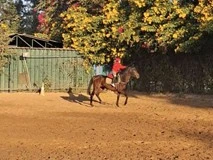
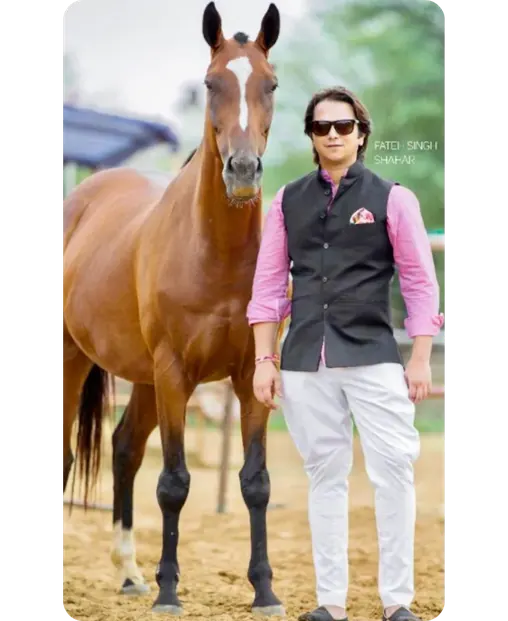
Thakur Fateh Singh of Shahar standing beside his horse
Thakur Fateh Singh Shahar — 14th custodian of Thikana Shahar, professional polo player, and founder of House of Shahar.

Thakur Fateh Singh Shahar

14th Custodian of Thikana Shahar & Founder of House of Shahar

Thakur Fateh Singh Shahar is the 14th custodian of Thikana Shahar, seat of the Pachyanot Kachwaha clan. The Pachyanots are one of the twelve kotris of the house of Amber (later Jaipur), descended from Pachyan Singh Ji, son of Raja Prithviraj Singh Ji of Amber.

Polo came to him through his father. Colonel Virendra Singh, a cavalry officer and a fine horseman and polo player, gave him his first lessons in the saddle, and the game has been his strength ever since.

A professional polo player of nearly two decades, he coaches, competes and trains with polo clubs across India. His work spans polo instruction, riding programmes for beginners and amateur players, and stable management.

He is the founder of House of Shahar, an umbrella of heritage and craftsmanship. It brings together Fateh Couture (bespoke menswear), Pachranga Jaipur (equestrian jewellery and accessories, founded by his wife, designer Surbhi Singh) and Shahar Palace, a 12-room heritage hotel in Civil Lines, Jaipur.

The family crest carries the Sanskrit motto Pātra Khaḍga Vijaya, "Victory of the Vessel and the Sword". The vessel stands for sustenance and hospitality, the sword for protection and justice: prosperity in peace, victory in war.
Thakurani Surbhi Singh of Shahar

Creative Director of Fateh Couture & Founder of Pachranga Jaipur

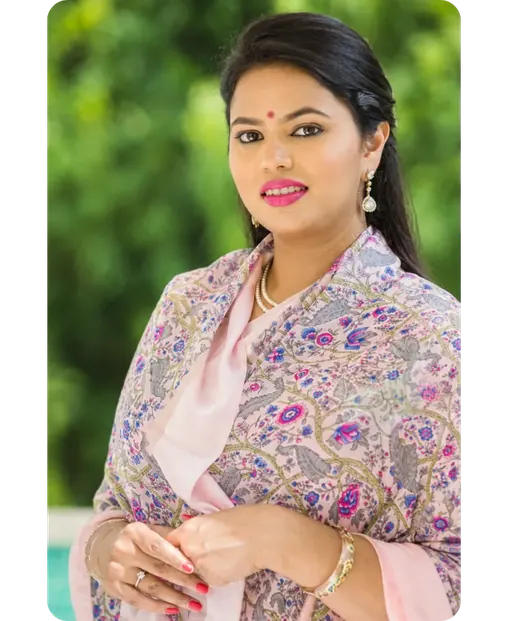
Thakurani Surbhi Singh is the Creative Director of Fateh Couture and the founder of Pachranga Jaipur. She is the design force behind both labels, from bespoke menswear to equestrian jewellery and accessories.

Born into the Singhvi family of Bikaner, whose kuldevi is Nagnechi Mata, she holds a BFA in Interior Design from the American University in Dubai and spent three years with BIID (Best Italian Interior Design) in Dubai.

Returning to India, she opened her own designer store for imported upholstery fabrics at Atria Mall, Mumbai, before joining Indeco, her family's home furnishings business in Jaipur.

She married into Shahar in 2016, launched Fateh Couture in 2017, and established Pachranga Jaipur in 2025, a label that translates the world of horsemanship into contemporary pieces.

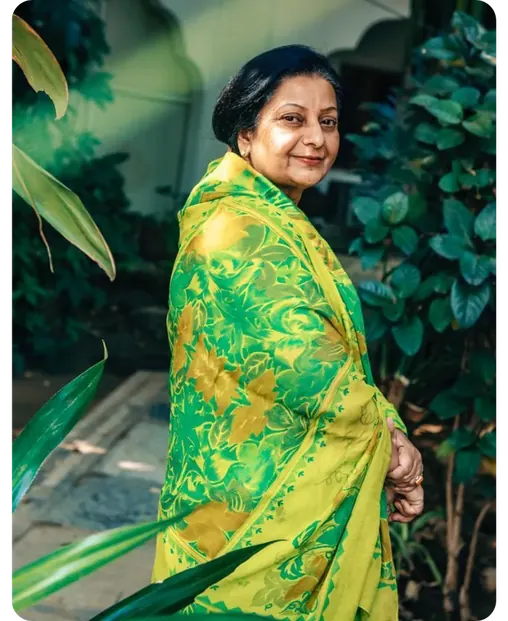
Thakurani Surbhi Singh of Shahar portrait
Thakurani Surbhi Singh of Shahar — Creative Director of Fateh Couture and founder of Pachranga Jaipur.
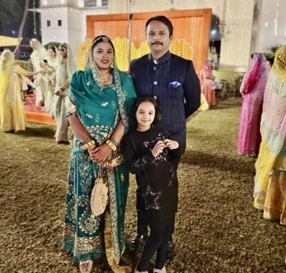
Thakur Fateh Singh Shahar, Thakurani Surbhi Singh and Baisa Vedakshi Singh
Thakur Fateh Singh Shahar, Thakurani Surbhi Singh and Baisa Vedakshi Singh.
Baisa Vedakshi Singh riding
Baisa Vedakshi Singh in the saddle — carrying on the family's love of horses.

Baisa Vedakshi Singh

The Next Generation of Shahar

Baisa Vedakshi Singh, daughter of Thakur Fateh Singh and Thakurani Surbhi Singh, is the next generation of Shahar. She will one day inherit the legacy of her parents, grandparents and the generations before them, and she is still young enough to choose her own path.

Now in primary school, she already has a world of her own. She is a natural in the saddle, carrying on the family's love of horses, and also plays tennis. She loves to sing and play the synthesiser, and like her mother she is an avid reader and a gifted young painter.

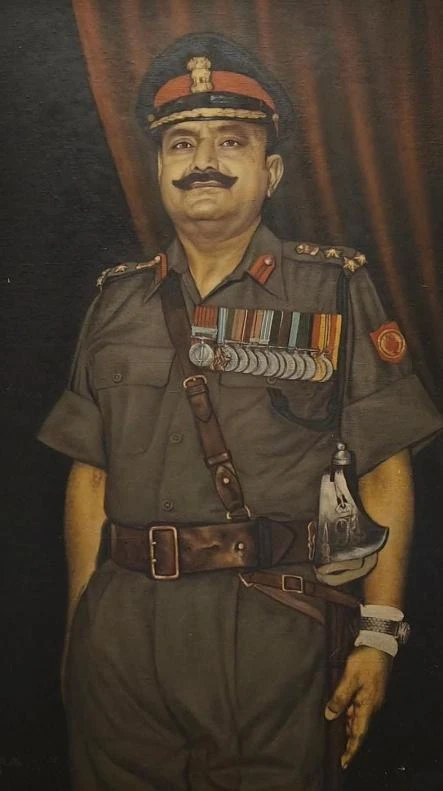
Thakur Colonel Virendra Singh Shahar

Distinguished Cavalry Officer & Co-Founder of Shahar Palace

Thakur Colonel Virendra Singh Shahar was a distinguished officer of the Indian Army's Armoured Corps. He was the son of Thakur Jaswant Singh Ji of Shahar and Thakurani Tara Kanwar (Tej Kanwar) of Lalgarh, Madhya Pradesh.

He lost his father as a young boy and grew up under the guardianship of his mother, Maji Chauhan Ji, who managed the family's affairs on his behalf after the jagirs were resumed.

He was commissioned into the 17th Poona Horse (Fakhr-i-Hind) in January 1969, and served for nearly 23 years until he retired in November 1991.

In December 1971, as a Captain, he commanded B Squadron of the Poona Horse at the Battle of Basantar in the Shakargarh sector, leading 14 tanks into action. The regiment, then commanded by Lieutenant Colonel (later Lieutenant General) Hanut Singh, held the Basantar bridgehead against Pakistani armour. Among his fellow officers was Second Lieutenant Arun Khetarpal, awarded the Param Vir Chakra posthumously. The tactics he used in that battle are still studied as a case study by young officers of the regiment.

He played an integral part in raising the 74 and 85 Armoured Regiments. His service also took him to Operation Cactus, high-altitude postings, internal security duties during the Emergency, and counter-insurgency operations in Akhnoor and Jammu and Kashmir.

His decorations include the Sangram Medal, the Paschimi Star, the 25th Independence Anniversary Medal, the Sainya Seva Medal with clasp "J&K", and the 20 Years and 9 Years Long Service Medals.

A true cavalryman, he was a gifted horseman and polo player. He passed his love of horses to his son Fateh, giving him his first lessons in the saddle.

Together with his wife, Maaji Sahiba Nalini Singh, he opened their family home in Civil Lines, Jaipur, as Shahar Palace in 1993, pioneering heritage hospitality in the city.

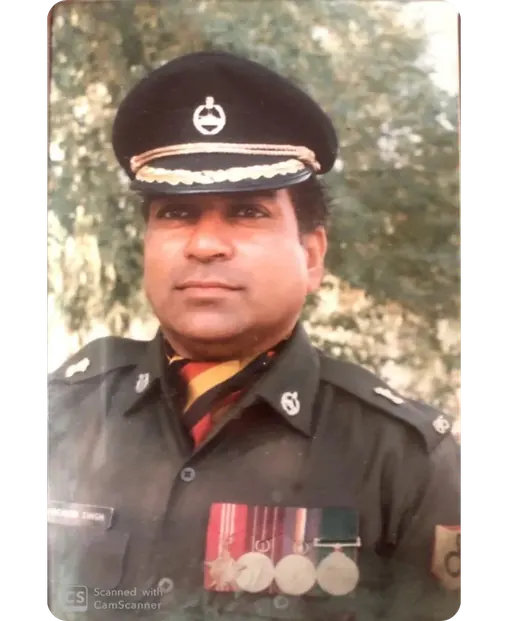
Thakur Colonel Virendra Singh of Shahar in military uniform
Thakur Colonel Virendra Singh Shahar — 17th Poona Horse (Fakhr-i-Hind), Battle of Basantar commander.
Portrait of Maaji Sahiba Nalini Singh of Kunadi
Maaji Sahiba Nalini Singh of Kunadi — custodian and driving force behind Shahar Palace.

Maaji Sahiba Nalini Singh of Kunadi

The Driving Force Behind Shahar Palace & Its Enduring Heritage

Maaji Sahiba Nalini Singh comes from the Jhala Rajput family of Kunadi, Kota. She is the daughter of Brigadier Kanwar Lakhpat Singh.

The Jhalas of Kunadi are a branch of the house of Delwara in Mewar. They moved to the Hadoti region, allied with the rulers of Kota, and settled at Kunadi on the banks of the Chambal, where they served the Kota State in its military campaigns and administration.

Her great-grandfather, Raj Bijai Singh Ji of Kunadi (1865–1934), was a Rai Bahadur, a member of Kota's Regency Council and cabinet, and among the state's finest players of cricket, polo and tennis.

Kunadi also has its own bond with the Poona Horse. Colonel Rishi Raj Singh of Kunadi commanded the regiment in the 1965 war. Colonel Shivraj Singh commanded it from 1969 until 3 October 1971, when he handed over to Hanut Singh, weeks before Basantar. Lieutenant General Ajai Singh of Kunadi, Brigadier Lakhpat Singh's first cousin and later Governor of Assam, was second-in-command of the Poona Horse at Basantar in 1971, in the same battle as Colonel Virendra Singh.

In 1993, together with Colonel Virendra Singh, she opened the family home in Civil Lines, Jaipur, to guests as Shahar Palace. She owns it today and remains the driving force behind its care and preservation.

Brigadier Kanwar Lakhpat Singh of Kunadi

A Distinguished Military Legacy Across Three Wars & UN Peacekeeping

Brigadier Lakhpat Singh (1925–2005), maternal grandfather of Thakur Fateh Singh, was the elder son of Captain Daulat Sen. Like his father, he was schooled at Mayo College, where he won the school tennis championship three years running.

He joined the Umed Infantry of Kota State in 1944 and served with it in the defence of Kashmir in 1948. When the State Forces merged into the Indian Army, he was allotted in 1949 to 4 Kumaon, his father's old battalion.

In the 1962 war with China he was in the thick of the action as GSO-II (Operations) under General Sagat Singh at Tezpur, and he saw action again in the wars of 1965 and 1971. He commanded 4 Kumaon from 1966, then raised and commanded 340 Mountain Brigade at Trivandrum.

He also served as ADC to General Nathu Singh and to General Rajendrasinhji, later Commander-in-Chief; with the first Indian contingent on UN peacekeeping duty in Gaza; as NCC Director at Lucknow; and finally as Sub-Area Commander, Lucknow.

After retiring he settled in Jaipur, where he founded an Ex-Servicemen Co-operative Society that gave security work to some 500 former soldiers. Those who served with him remember a sharp, widely read officer of formal bearing and exacting standards, who came through more than one air crash in the line of duty.

Brigadier Kanwar Lakhpat Singh of Kunadi
Brigadier Kanwar Lakhpat Singh of Kunadi (1925–2005) — veteran of 1948, 1962, 1965 and 1971.
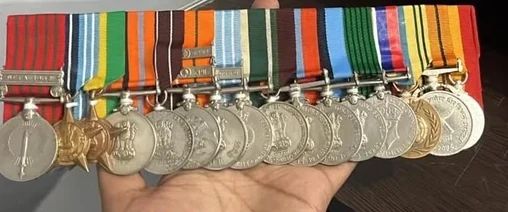
The medal group of Brigadier Lakhpat Singh carrying sixteen decorations

The Medal Group of Brigadier Lakhpat Singh

His medal bar carries sixteen decorations, spanning service from the Second World War and Kashmir (1948) to the liberation of Bangladesh (1971) and UN peacekeeping in Gaza.

War Medal 1939–45

Service in the Second World War.

Indian Independence Medal 1947

Serving in uniform on Independence Day, 15 August 1947.

General Service Medal 1947 (Clasp NEFA 1962)

The 1962 war with China in the North-East Frontier Agency.

Samar Seva Star 1965

Active service in the 1965 war with Pakistan.

Raksha Medal 1965

Service during the 1965 war.

Poorvi Star

Service in the Eastern theatre in 1971, the war that liberated Bangladesh.

Sangram Medal

Service in the 1971 war.

Sainya Seva Medal (Clasps Himalaya & J&K)

Service in hard conditions in the high Himalaya and Jammu & Kashmir.

Videsh Seva Medal (Clasp UAR)

Service abroad in Egypt (then the United Arab Republic).

United Nations Emergency Force Medal

UN peacekeeping in Gaza and Sinai.

25th Independence Anniversary Medal

Serving on the 25th anniversary of Independence, 1972.

30, 20 & 9 Years Long Service Medals

Three decades of dedicated military service.

Coronation Medal, King of Nepal

Commemorating the coronation of the King of Nepal.

Coronation Medal, Chogyal of Sikkim

Commemorating the coronation of the Chogyal of Sikkim.

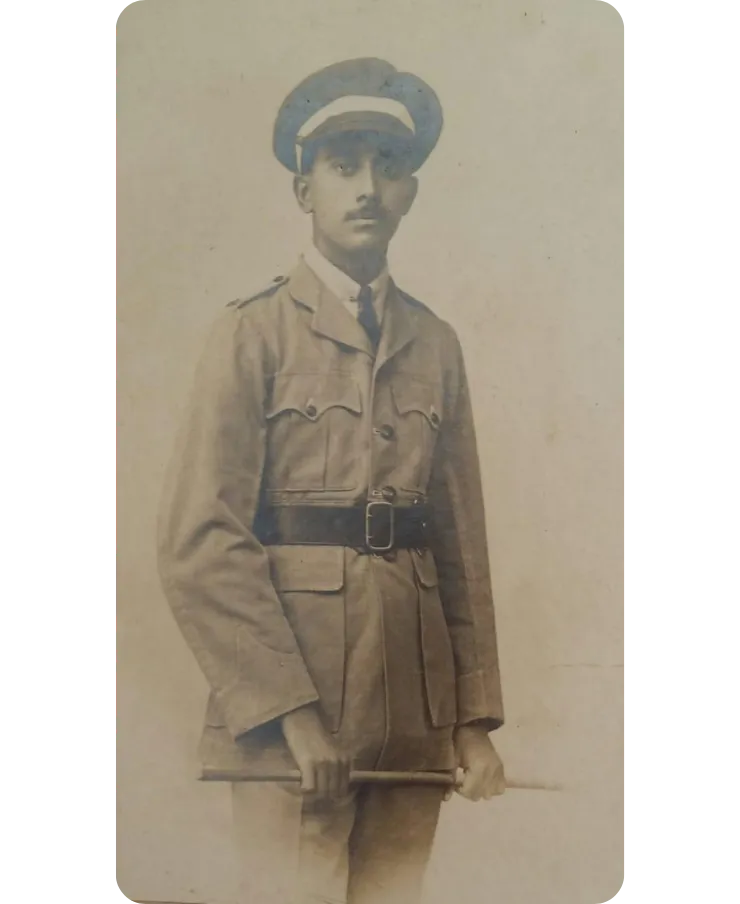
Captain Raj Daulat Sen of Kunadi
Captain Raj Daulat Sen of Kunadi (1895–1967) — among the first Indians to earn the King's Commission.

Captain K. Daulat Sen of Kunadi

An Early Voice of Indian Self-Respect in the British Indian Army

Captain Raj Daulat Sen (1895–1967), maternal great-grandfather of Thakur Fateh Singh, was the fourth son of Raj Bijai Singh Ji of Kunadi. Educated at Mayo College, he was a gifted all-rounder and tennis player, chosen to play the champion Bill Tilden when he toured Ajmer.

He was among the first Indians to earn the King's Commission, on a special course at Daly College, Indore, in 1918–19 that also trained K. M. Cariappa, later Field Marshal.

Commissioned into the 19th Hyderabad Regiment (later 4 Kumaon), he joined it at Basra in Iraq, where he received the regiment's second Indian officer, K. S. Thimayya, later Chief of the Army Staff. He went on to serve on the North-West Frontier and at Quetta.

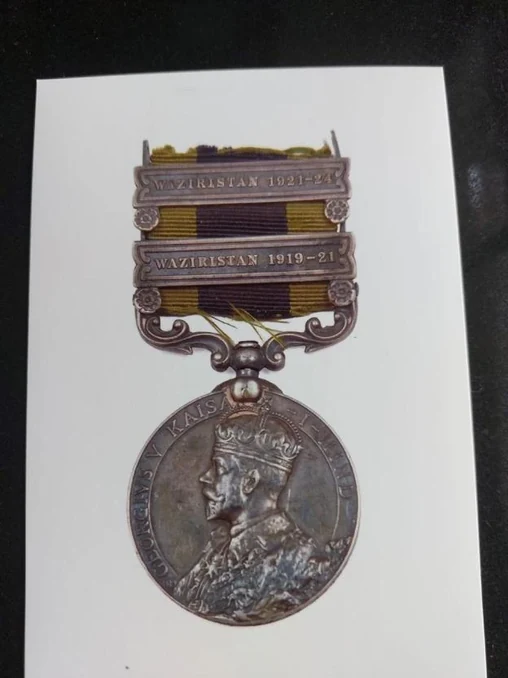
His medals record that service: the British War Medal 1914–20; the India General Service Medal with clasps Waziristan 1919–21 and Waziristan 1921–24, for the hard frontier campaigns against the tribes of Waziristan; and a second India General Service Medal for later frontier service up to 1932.

He resented the way British officers treated their Indian colleagues, and refused to hide it. As the senior Indian officer of his battalion, he asked that Indian food be served in the Officers' Mess and that the band play Indian tunes; off duty, he often wore dhoti-kurta in defiance.

An inquiry followed on a charge of "un-officer-like behaviour", and in 1932 he was retired early as a Captain. The episode is recorded in the battalion's official history, The Fighting Fourth. It stands as an early act of Indian self-respect within the British Indian Army.

Two Great-Grandfathers

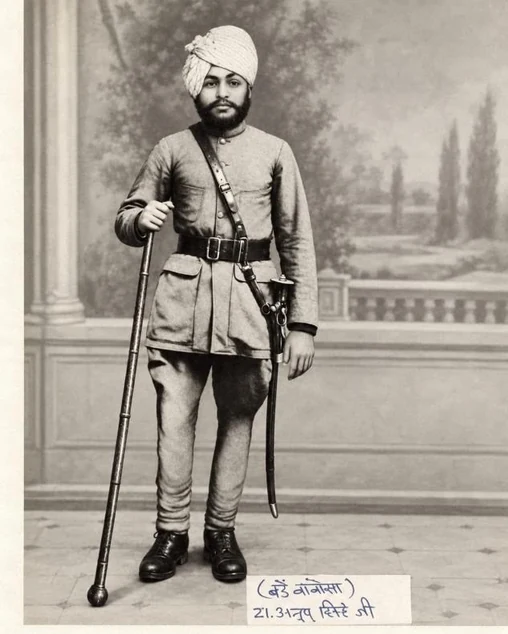
Thakur Anoop Singh Ji of Shahar & Thakur Chiman Singh Ji of Thikana Samariya

Thakur Fateh Singh has two great-grandfathers, who were brothers, the sons of Thakur Shiv Singh Ji of Shahar: Thakur Anoop Singh Ji, the elder, who succeeded to Shahar, and Thakur Chiman Singh Ji, the younger, who went in adoption to Thikana Samariya.

Thakur Anoop Singh Ji of Shahar (Bade Babosa)

Thakur Anoop Singh Ji of Shahar

Thakur Anoop Singh Ji had no son to succeed him; his only child, a daughter, married into Jaora in Madhya Pradesh. He adopted his younger brother's first-born, Jaswant Singh Ji, as heir to the gaddi of Shahar.

A man of faith and good humour, Anoop Singh Ji would sit for hours with his brother Chiman Singh Ji in religious discussion with Mahatma Yadav Das Ji, a holy man who came to Shahar on pilgrimage and stayed. He married three times; his daughter, Naina Baisa, was born to his third wife, Champawat Ji Sa.

His household at Shahar is still remembered, from the tailor Farzal Khan, whose quick wit earned him the nickname "Birbal", to the musicians of the Rana family on the nagara and shehnai.

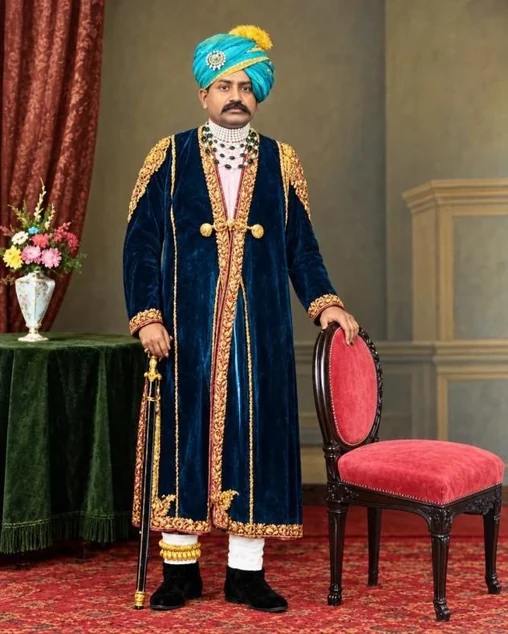
Thakur Chiman Singh Ji of Thikana Samariya
Thakur Chiman Singh Ji of Thikana Samariya (colourised portrait)

Thakur Chiman Singh Ji of Thikana Samariya

Thakur Chiman Singh Ji gave his eldest son to Shahar. The adoption joined the two houses as one family, and the bond between Shahar and Samariya remains close to this day.

The house of Samariya, the senior (Tikai) Pachyanot thikana, has its own story of sacrifice. Its ancestor, Thakur Sujan Singh of Nayla, gave his life defending the temple of Jagannath at Goner against the Mughal commander Abu Turab, in Aurangzeb's reign. The chronicle Kurm Vilas says he "gave his head for Jagannath, and kept dharma steadfast on earth", and his memorial still stands beside the tank at Goner.

Moved by his stand, Raja Ram Singh of Amber granted Samariya to Sujan Singh's son, Ballu Singh. Chiman Singh Ji's son Abhay Singh was elected to the Rajasthan Legislative Assembly in 1962.

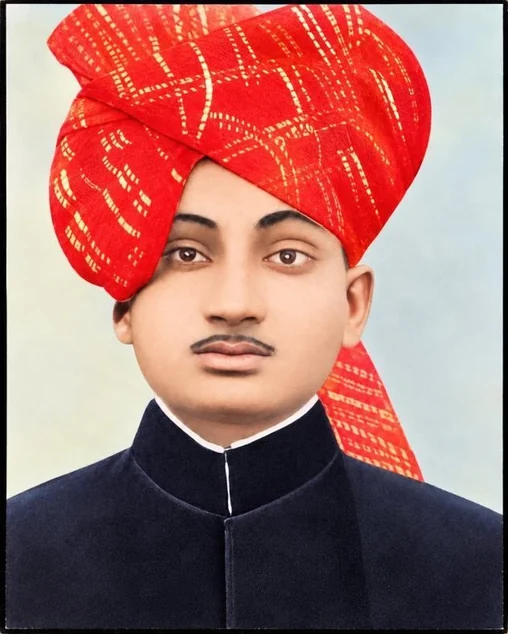
Thakur Jaswant Singh Ji of Shahar
Thakur Jaswant Singh Ji — last noble ruler of Thikana Shahar before Independence.

Thakur Jaswant Singh Ji of Shahar

Preserving the Pachyanot Lineage and the Legacy of Thikana Shahar

Thakur Jaswant Singh Ji was the last noble ruler of Thikana Shahar in the era of the princely states. Born in 1919, the elder son of Thakur Chiman Singh Ji of Thikana Samariya, he was adopted as a boy by his uncle, Thakur Anoop Singh Ji of Shahar, Chiman Singh Ji's elder brother.

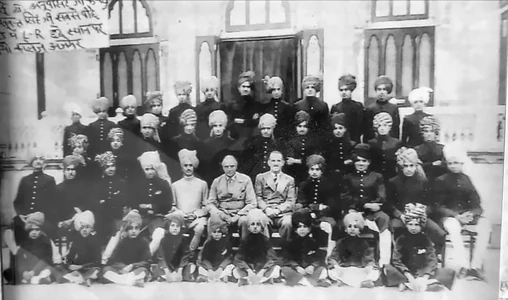
Until he came of age, Shahar was run by the Jaipur State Court of Wards. He was educated at Mayo College, Ajmer, where he was known as a fine sportsman.

The adoption was not uncontested. Kinsmen in Shahar objected to an heir from Samariya, but Anoop Singh Ji's widow, Thakurani Champawat Ji, daughter of Alam Singh Ji of Pilwa, took the case to the British authorities and won, insisting that Shahar's heir be her brother-in-law's son.

He married twice. With his first wife, Ucchav Kanwar of Dangarthal, daughter of Thakur Devi Singh Ji Jodha, he had a son, Bhojraj Singh Ji, and a daughter, Ummed Kanwar Ji. With his second wife, Tara Kanwar of Lalgarh (Ujjain), he had a son, Virendra Singh, and a daughter, Devika (Nancy). He died young, at 29, soon after Independence.

Bhojraj Singh Ji had three sons: the late Bhawani Singh Ji, Hanuwant Singh Ji and the late Laxman Singh Ji.

He carried forward an unbroken line from Pachyan Singh Ji, founder of the Pachyanot branch, through Bithaldas Ji and Haridas Ji, first of Thikana Shahar, down to Thakur Fateh Singh today.

The Seat of Shahar

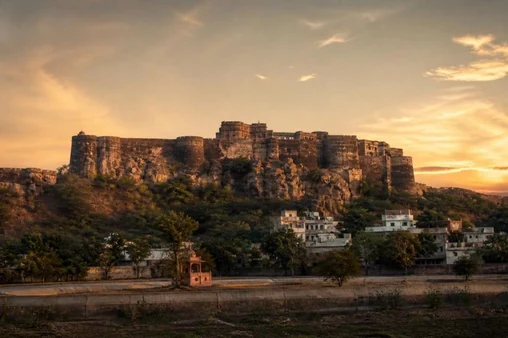
Shahar Fort, Ancestral Valour & The Cannon Rakra

The family's ancestral seat is Shahar Fort, in Panchayat Samiti Nadoti, District Karauli. Family records say the fort was begun by Bharmal Ji, who came to Shahar from Nadoti at the invitation of the local Meena community.

The fort crowns a high hill and is still lived in today. A rampart with sixteen great bastions runs around it, and traces of the deep moat that once encircled it can still be seen. A winding road, like Amber's, climbs to the main gate on the north; the Sop, Kaima and Khud gates, each named after the village its road led to, were also in use. Inside stand the zanana and mardana palaces, the silahkhana (armoury), the granary, and two great tanks for storing water.

His descendant Umed Singh Ji fought for Jaipur against the Jats of Bharatpur at the Battle of Maonda in 1767. Family tradition holds that he fought on even after he was beheaded, and Jaipur confirmed Shahar to the family as its jagir in recognition. Later, Sawai Pratap Singh of Jaipur conferred the Tazimi rank on Raghunath Singh Ji, with the honour of the palanquin.

When Holkar's army threatened Jaipur, Aman Singh Ji led 500 men into the ravines of Karauli and drove it back, helped by the fort's single small cannon, Rakra. In the next generation Bakhtawar Singh Ji held out through a two-month siege by Holkar. He fasted in the fort's Durga temple until, the family says, the Goddess promised him victory in a dream.

Shahar Fort in Nadoti Karauli
Shahar Fort, Panchayat Samiti Nadoti, District Karauli — crowned with sixteen bastions and a history of legendary defence.

Sehra Mata & The Chhatris

Sacred Deity, Ancient Temples & Living Fresco Heritage

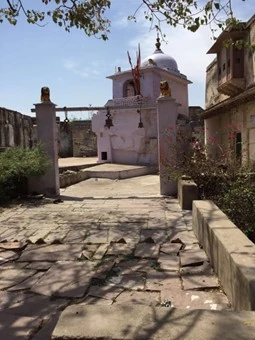
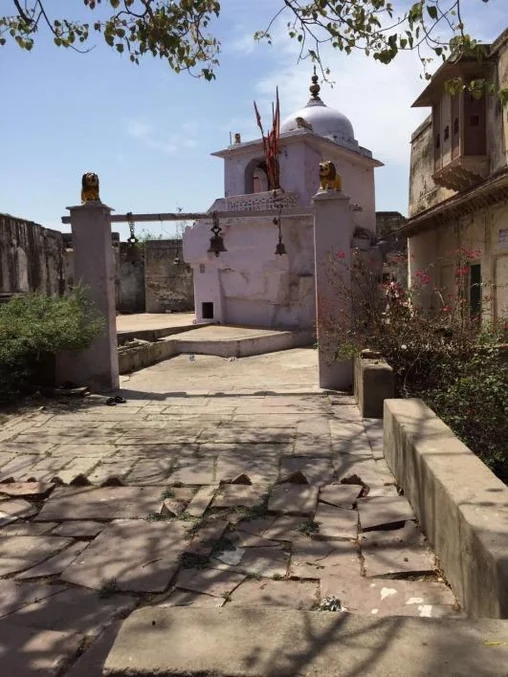
The temple of Sehra Mata on its rock inside Shahar Fort
The temple of Sehra Mata on its rock inside Shahar Fort.
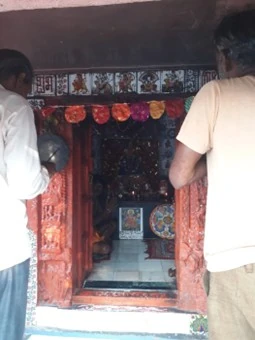
The sanctum of Sehra Mata
The sanctum of Sehra Mata.

Sehra Mata & Sitaram Ji

At the heart of the fort, a great rock rises tall and strong, and on it stands the ancient temple of Sehra Mata, the goddess who gives the town its name. Worshipped for centuries, she is the family's protector, and every year a large fair gathers at her temple during Chaitra Navratri.

Beside her temple stands the temple of Sitaram Ji, the family's deity since Bithaldas Ji's time. Around twenty-two temples in all stand in the town below.

The Chhatris of Shahar domed sandstone memorial pavilions
The chhatris of Shahar: domed sandstone pavilions housing frescoes of the Mahabharata.

The Chhatris of Shahar

Beside the village stand the chhatris of Shahar: domed stone pavilions raised over the very spot where each Thakur and elder of the family was cremated. The umbrella-shaped dome is an ancient Indian symbol of protection and authority, and raising a chhatri is the highest honour a family can pay to those who came before.

The chhatris of Shahar carry some of the finest fresco work of the region, with scenes from the Mahabharata painted on their ceilings and walls. Like the murals in the fort's palaces and temples, they are a living record of the artists who worked for the house.